
Table of Contents
Introduction
Search engine optimization is often misunderstood as a technical checklist rather than a long-term growth system. Many websites publish content regularly, optimize a few keywords, build some backlinks, and still struggle to rank on Google. The reason is rarely a single issue. Instead, rankings drop or fail to grow because of multiple small but critical SEO mistakes that accumulate over time.
The reality of modern SEO is simple: search engines are no longer just evaluating keywords or backlinks. They are evaluating intent satisfaction, content depth, user experience, website structure, technical performance, and overall trust signals. If even one of these areas is weak, it can limit your entire website’s visibility.
Most websites do not fail because they lack effort. They fail because they follow outdated SEO practices or misunderstand how ranking systems work today. A keyword may be targeted correctly, but the content may not satisfy user intent. A website may have strong content, but poor internal linking prevents authority from flowing properly. A blog may attract backlinks, but technical issues may block indexing or slow down crawling.
Understanding these mistakes is essential because SEO success is not about doing one thing extremely well; it is about avoiding multiple silent failures that weaken your site’s performance. In this article, we will break down the most common SEO mistakes that hurt rankings, explain why they matter, and show you how to fix them using modern, practical strategies aligned with today’s search engine expectations. This guide is designed to help you build long-term authority and create a website that consistently performs across competitive search environments.
Understanding How SEO Mistakes Impact Rankings
Before identifying specific mistakes, it is important to understand how search engines interpret website quality. Google uses complex ranking systems that evaluate relevance, usability, trust, and performance. When your site makes repeated mistakes, it sends negative signals across these systems.
Search engines typically evaluate:
- Content relevance to search queries
- User engagement behavior such as bounce rate and dwell time
- Website structure and crawlability
- Technical performance including speed and mobile usability
- Authority signals such as backlinks and brand trust
When these signals are inconsistent or weak, rankings decline even if individual pages are well written. This is why SEO must be approached as a complete ecosystem rather than isolated tasks.
A strong foundation can be reinforced by following structured learning resources such as the Complete SEO Guide, which helps establish a full understanding of how ranking systems operate.
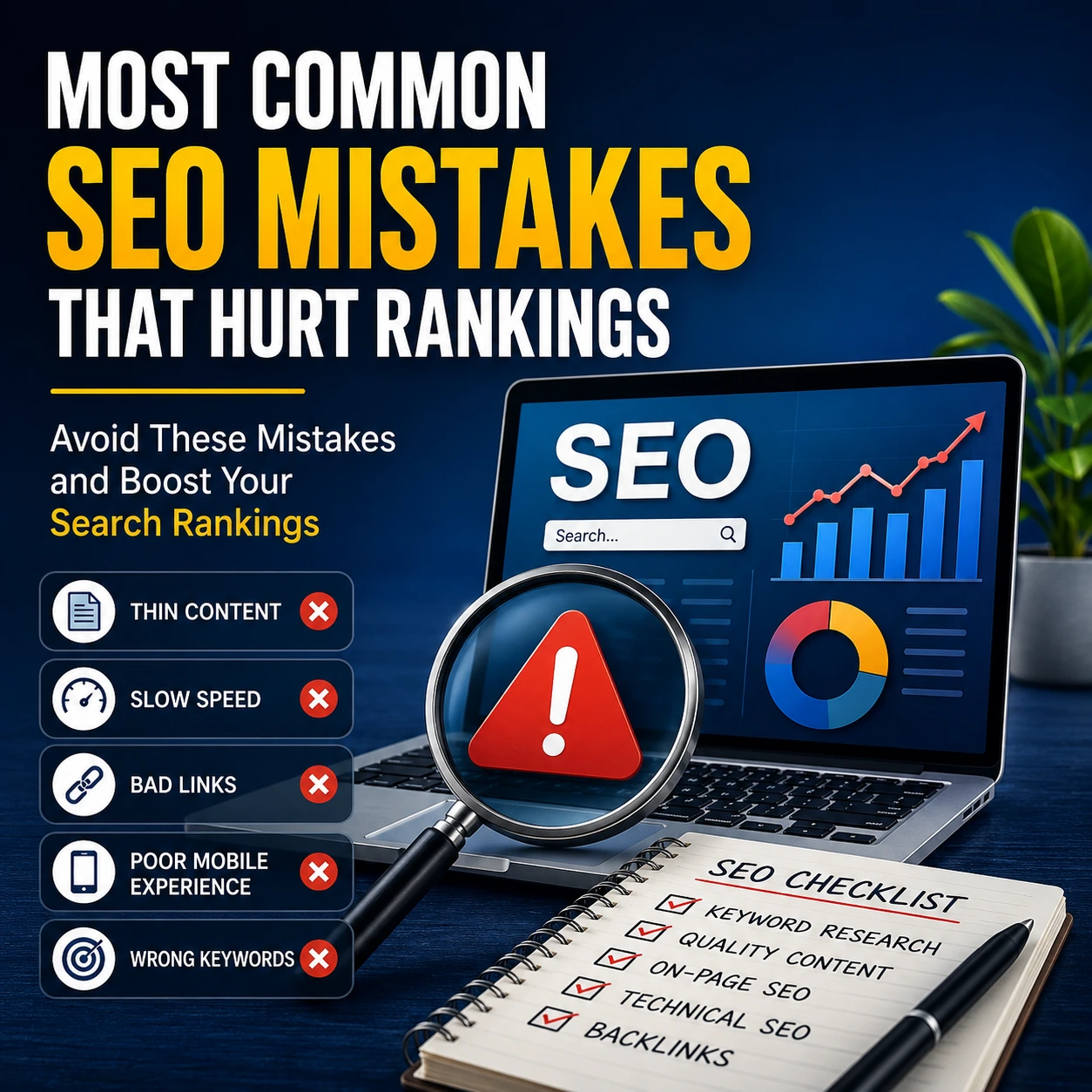
Most Common SEO Mistakes That Hurt Rankings
Ignoring Search Intent
One of the most critical SEO mistakes is targeting keywords without understanding what users actually want. Search intent determines whether a page ranks or fails, regardless of keyword usage or backlink strength.
When users search for a term, they expect a specific type of content. If your content does not match that expectation, search engines will prioritize competitors who better satisfy the query.
Common intent mismatches include:
- Writing informational content for transactional keywords
- Creating blog posts for queries that require product pages
- Publishing lists when users expect step-by-step guides
For example, targeting “best SEO tools” but writing a generic definition instead of a comparison list creates a mismatch. Google will favor pages that provide structured comparisons, features, pricing, and recommendations.
Fixing this requires analyzing top-ranking pages before writing. You must study format, depth, and structure. Search intent alignment is the foundation of modern SEO and directly impacts click-through rates and rankings.
Poor Keyword Strategy and Misuse
Keyword mistakes remain one of the most common reasons websites fail to rank properly. These mistakes usually fall into two categories: over-optimization and under-optimization.
Over-optimization occurs when keywords are repeated unnaturally throughout content. This creates a spam-like pattern that reduces readability and may trigger ranking suppression. Under-optimization occurs when content does not clearly signal its topic, making it difficult for search engines to understand relevance.
Modern SEO requires semantic optimization rather than repetition. Instead of repeating the same keyword, use related variations and contextual terms. For example, instead of repeatedly using “SEO mistakes,” you can include terms like ranking issues, optimization errors, and search visibility problems.
A structured approach to keyword research is essential for avoiding these issues. A strong foundation can be built using the Keyword Research Guide, which helps identify high-intent keywords and semantic clusters.
Thin or Low-Value Content
Thin content is one of the fastest ways to lose rankings. Search engines prioritize pages that provide depth, clarity, and comprehensive coverage of a topic. Pages that lack substance often fail to compete, even if they are technically optimized.
Thin content typically includes:
- Short articles with minimal explanation
- Generic content without examples or insights
- Pages that repeat existing information without adding value
- AI-generated text without human refinement
Modern SEO demands depth and authority. A strong article should fully answer user questions, provide examples, and explore subtopics in detail. Longer content naturally performs better when it maintains quality because it increases dwell time and user satisfaction.
High-performing websites focus on topical authority rather than isolated posts. This means building clusters of related content that reinforce each other.
Weak Technical SEO Foundation
Technical SEO issues can silently destroy rankings even when content is strong. Search engines rely on technical signals to crawl, index, and understand websites efficiently.
Common technical SEO mistakes include:
- Slow page speed
- Broken internal or external links
- Missing XML sitemap
- Poor mobile optimization
- Incorrect indexing settings
When these issues exist, search engines may struggle to properly access or evaluate your content. As a result, pages may not rank at their full potential.
Technical performance can be improved using insights from the Technical SEO Guide, which focuses on Core Web Vitals, performance optimization, and crawl efficiency.
Poor On-Page SEO Optimization
On-page SEO is the foundation of content visibility. Even high-quality content can fail if on-page elements are not properly optimized.
Common mistakes include:
- Weak or missing title tags
- Poorly structured headings
- Lack of meta descriptions
- Missing image alt text
- Unoptimized URLs
These elements help search engines understand content structure and relevance. Without them, your page loses clarity and ranking potential.
A structured approach using an On-Page SEO Checklist ensures every page is optimized for both users and search engines.
Ignoring Internal Linking Strategy
Internal linking is one of the most underrated ranking factors. It helps distribute authority across your website and improves content discoverability.
Common mistakes include:
- Publishing pages without linking to them
- Using non-descriptive anchor text
- Creating isolated content with no connections
- Overloading certain pages with internal links while neglecting others
Internal linking helps search engines understand content relationships and hierarchy. Without it, important pages may remain invisible or underpowered.
A strong internal linking system is often part of a broader SEO structure, such as content clusters and pillar pages.
Low-Quality or Irrelevant Backlinks
Backlinks remain a strong ranking factor, but quality matters far more than quantity. Many websites still rely on outdated link-building strategies that focus on volume instead of relevance.
Common backlink mistakes include:
- Buying spam links
- Using automated link-building tools
- Getting links from unrelated websites
- Overusing exact-match anchor text
Such practices can reduce trust and harm rankings instead of improving them. Modern SEO requires natural, relevant, and authoritative backlinks.
A strong foundation in link building can be developed through the Off-Page SEO Guide, which focuses on ethical and sustainable authority building.
Ignoring Mobile Optimization
Mobile-first indexing means Google primarily evaluates the mobile version of your website for ranking purposes. If your mobile experience is poor, rankings will suffer regardless of desktop performance.
Common mobile SEO mistakes include:
- Unresponsive layouts
- Slow mobile loading speed
- Poor readability on small screens
- Difficult navigation
Since most users browse from mobile devices, poor optimization directly affects user engagement and ranking signals.
Lack of Content Freshness
Search engines prefer updated and relevant content. Websites that publish content once and never update it often lose rankings over time.
Content decay happens when:
- Information becomes outdated
- Competitors publish newer content
- User expectations evolve
Regular updates help maintain ranking stability and improve visibility. Updating existing content is often more effective than creating new posts.
Keyword Cannibalization
Keyword cannibalization occurs when multiple pages target the same keyword. This confuses search engines and splits ranking potential across multiple URLs.
Common issues include:
- Multiple blog posts targeting identical topics
- Overlapping keyword targeting across pages
- Lack of content consolidation
Fixing cannibalization requires restructuring content and consolidating overlapping pages into stronger, authoritative resources.
Advanced Strategies to Fix SEO Mistakes
Build Topic Clusters
Topic clusters organize content around a central pillar page supported by related articles. This improves authority and internal linking strength.
Focus on Search Intent Mapping
Map each keyword to a specific intent type before writing. This ensures alignment with user expectations.
Strengthen Content Depth
Expand content to cover subtopics, examples, and real-world applications.
Improve Technical Foundations
Regularly audit your site for speed, indexing, and crawl issues.
Key Metrics To Track
Tracking SEO performance is essential for identifying mistakes early.
Important metrics include:
- Organic traffic growth
- Bounce rate
- Average session duration
- Keyword rankings
- Click-through rate (CTR)
- Indexed pages
- Core Web Vitals performance
Monitoring these metrics helps detect weak areas before they impact rankings significantly.
Key Takeaways
SEO success depends on avoiding small but impactful mistakes rather than chasing shortcuts. Search intent alignment, technical optimization, content depth, and internal linking are the core pillars of ranking stability. Websites that consistently maintain these areas outperform competitors in long-term visibility and authority.
Frequently Asked Questions
Why is my website not ranking despite good content?
Your content may not align with search intent, or technical SEO issues may be limiting visibility.
What is the most common SEO mistake beginners make?
Ignoring keyword research and publishing content without understanding user intent.
How important is technical SEO for rankings?
Technical SEO is critical because it controls crawlability, indexing, and site performance.
Can outdated content hurt rankings?
Yes, outdated content reduces relevance and can lead to ranking decline.
What is keyword cannibalization in SEO?
It happens when multiple pages target the same keyword, causing ranking confusion.
How do backlinks affect SEO?
High-quality backlinks improve authority, while spam backlinks can harm rankings.
Is internal linking really important?
Yes, it improves crawlability and distributes authority across your website.
How often should I update SEO content?
Ideally every 3–6 months depending on competition and topic relevance.
What is the biggest SEO mistake overall?
Failing to align all SEO elements into a unified strategy.
Can mobile optimization affect desktop rankings?
Yes, because Google uses mobile-first indexing for ranking evaluation.
Conclusion
SEO mistakes are often subtle but highly impactful. Most websites do not fail because of a lack of effort, but because of repeated structural, technical, and strategic errors that weaken overall performance. From ignoring search intent to poor technical SEO and weak internal linking, each mistake reduces ranking potential in a measurable way.
Building a strong SEO foundation requires consistency, structure, and continuous improvement. By avoiding these common mistakes and following a strategic approach supported by resources like the Complete SEO Guide, websites can achieve stable rankings, higher organic traffic, and long-term authority in competitive search environments.